

Home > NEWS > Industrial News
The Body Mass Index (BMI) calculates health risk based solely on height and weight measurements, completely ignoring what's actually inside the body. The problem here is pretty basic really - it can't tell the difference between healthy lean muscle and unhealthy fat deposits. That's why so many top athletes end up labeled as overweight or even obese according to BMI standards, even though their body fat percentages are rock bottom and their heart health is spot on. On the flip side, someone might look great on paper with a "normal" BMI but still carry dangerous amounts of belly fat around their organs. And this matters because belly fat is closely linked to problems like insulin resistance, type 2 diabetes, and heart issues. Muscle and fat work against each other in terms of how they affect our metabolism and inflammatory responses, so BMI just doesn't cut it when trying to assess real health risks. Sure, it's simple to calculate, but that simplicity makes it almost useless for doctors trying to make treatment choices or for people wanting to track their fitness improvements over time.
The Body Mass Index just doesn't cut it when it comes to identifying certain at-risk populations. Take for instance highly muscular athletes who get slapped with overweight or obese labels even though their blood work looks great. Then there are older folks whose BMI might still read "normal" but they're actually losing muscle mass and packing on fat without anyone noticing. And don't forget about people with sarcopenic obesity either – those with low muscle mass paired with high body fat levels. The sad truth is that someone with this condition can be just as vulnerable to early death as someone classified as obese according to standard metrics. Real world numbers back this up too. Studies show that more than a third of seniors with what appears to be a healthy BMI are actually carrying dangerous amounts of visceral fat and showing signs of metabolic dysfunction. When healthcare professionals rely solely on BMI readings, patients miss out on timely treatment options and personalized approaches to managing their health effectively.
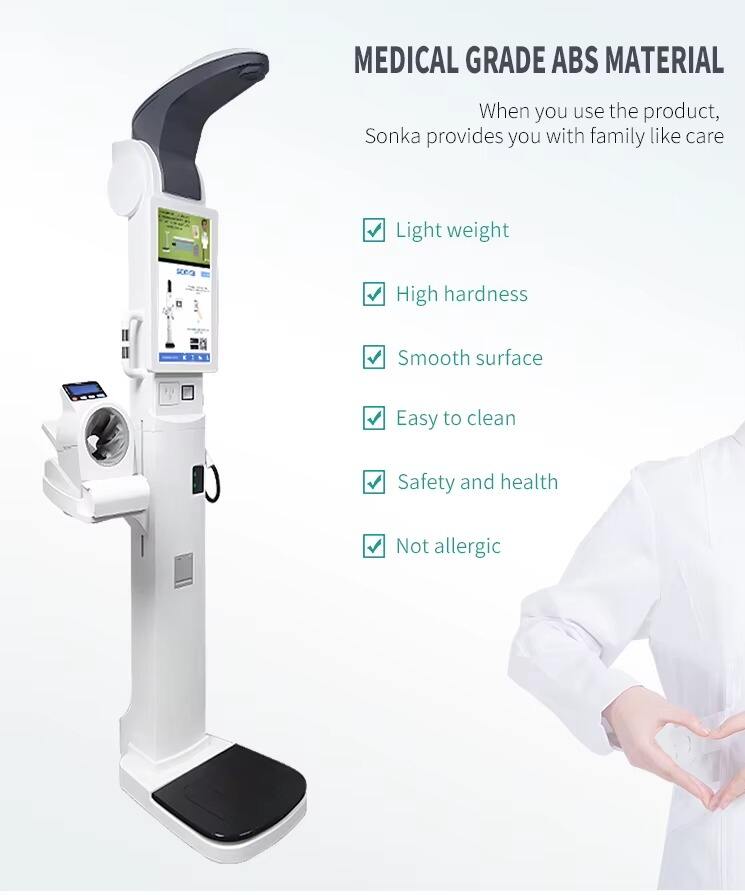
The InBody device works differently from regular BMI tests and basic single-frequency BIA machines. What makes it special is its eight electrode setup that sends out several different electrical signals through specific parts of the body. Think about how we're basically made up of right and left arms, legs, plus our torso. The lower frequency signals mainly look at what's happening outside the cells (that's called extracellular water). When they crank up the frequency, these signals actually get inside the cells themselves to check intracellular water levels and overall body water content. This back and forth between different frequencies helps make sure the readings are accurate even when someone's hydration level fluctuates. Some research indicates this method can cut down on hydration related mistakes by around 40% compared to older systems that only use one frequency setting.
InBody generates clinically actionable metrics that BMI cannot provide:
About one out of every three adults gets mislabeled when it comes to heart and metabolism risks based on their BMI alone. Research from the University of Florida in 2025 showed something interesting: BMI couldn't accurately predict death rates for around 32% of people studied. Meanwhile, measurements taken through InBody technology like visceral fat area and the ECW/TBW ratio had much better connections to actual health outcomes. What makes InBody different? It looks at body composition segment by segment, picking up on belly fat deposits and changes in body fluids that are actually connected to problems like insulin resistance and metabolic syndrome. Take this example: someone whose visceral fat levels are high according to InBody readings has roughly three times greater chance of getting type 2 diabetes than someone who would be considered obese just based on traditional BMI calculations.
Peer-reviewed validation confirms InBody devices meet rigorous clinical standards. Across athletic, geriatric, and multi-ethnic populations, InBody 570 and 380 models demonstrate 91–95% agreement with reference methods:
| Metric | InBody 570/380 | BMI | Gold Standard |
|---|---|---|---|
| Muscle mass | 94% agreement | 41% error | DEXA |
| Visceral fat | 92% accuracy | N/A | CT scans |
| Fluid balance | 91% reliability | No data | Air displacement plethysmography (ADP) |
These findings underpin the American Medical Association’s 2025 policy update, which explicitly recommends replacing BMI-only assessments with body composition metrics—including skeletal muscle index and visceral fat—for obesity diagnosis, treatment planning, and reimbursement justification.
BMI still has its place for quick, cheap screenings across populations since all it needs is a scale and measuring stick, no fancy equipment or special training required. Works great in places with limited resources where doctors need to get a rough idea of who might be at risk. On the flip side, InBody machines cost money upfront but give detailed breakdowns of body composition within about a minute. These devices matter a lot when we need to tell muscle from fat differences that actually affect health outcomes. Think about older people dealing with sarcopenic obesity, athletes trying to build lean muscle mass, or patients with chronic conditions needing to track fluid changes. The American Medical Association doesn't recommend using BMI alone because it can't show where visceral fat accumulates or how healthy someone's muscles are factors that really impact metabolism and overall function. Start with BMI for basic screening purposes, then bring out the InBody tech when clearer diagnosis matters for treatment decisions, tracking real improvements, or justifying insurance claims. Picking the right tool based on what we actually need clinically rather than what's easiest helps everyone get better results while making smarter use of healthcare dollars.

Copyright © 2025 by Shenzhen Sonka Medical Technology Co., Limited - Privacy policy