

Home > NEWS > Industrial News
Photobiomodulation, or PBM for short, works by shining specific light colors mainly from the red to near infrared range onto cells. This process gets mitochondria working harder, which increases energy production inside cells, speeds up healing after injuries, and seems to reduce swelling in tissues. Another approach called PEMF therapy sends out weak changing magnetic fields that help boost electrical differences across cell membranes. These fields support how ions move in and out of cells and might even help kickstart repair processes within the body. Molecular hydrogen is interesting stuff too because it targets harmful free radicals like hydroxyl radicals and peroxynitrites while leaving alone other reactive molecules that actually play important roles in our metabolism. Lastly there's vibroacoustic therapy where special devices built into treatment rooms produce vibrations between 30 to 80 hertz. When someone lies in these chambers, their entire body gently shakes along with the sound waves. This appears to sync brainwave patterns and calm down the part of the nervous system responsible for fight or flight responses.
These different treatment approaches work together on various levels within the body. PBM and PEMF help kickstart cell energy production and tissue repair processes. Molecular hydrogen acts as protection against damage when new tissues are forming. Vibroacoustic therapy meanwhile helps regulate the body's automatic functions so recovery progress stays consistent. According to research findings, combining all these methods can cut down inflammation throughout the body four times quicker than using just one treatment alone. This comprehensive approach targets three main areas: inside cells (mitochondria), throughout the whole body (systemic), and in nerve function (neurophysiological). Most people complete these combined treatments in around 30 minutes per session, making it quite efficient for those looking to speed up their healing process.
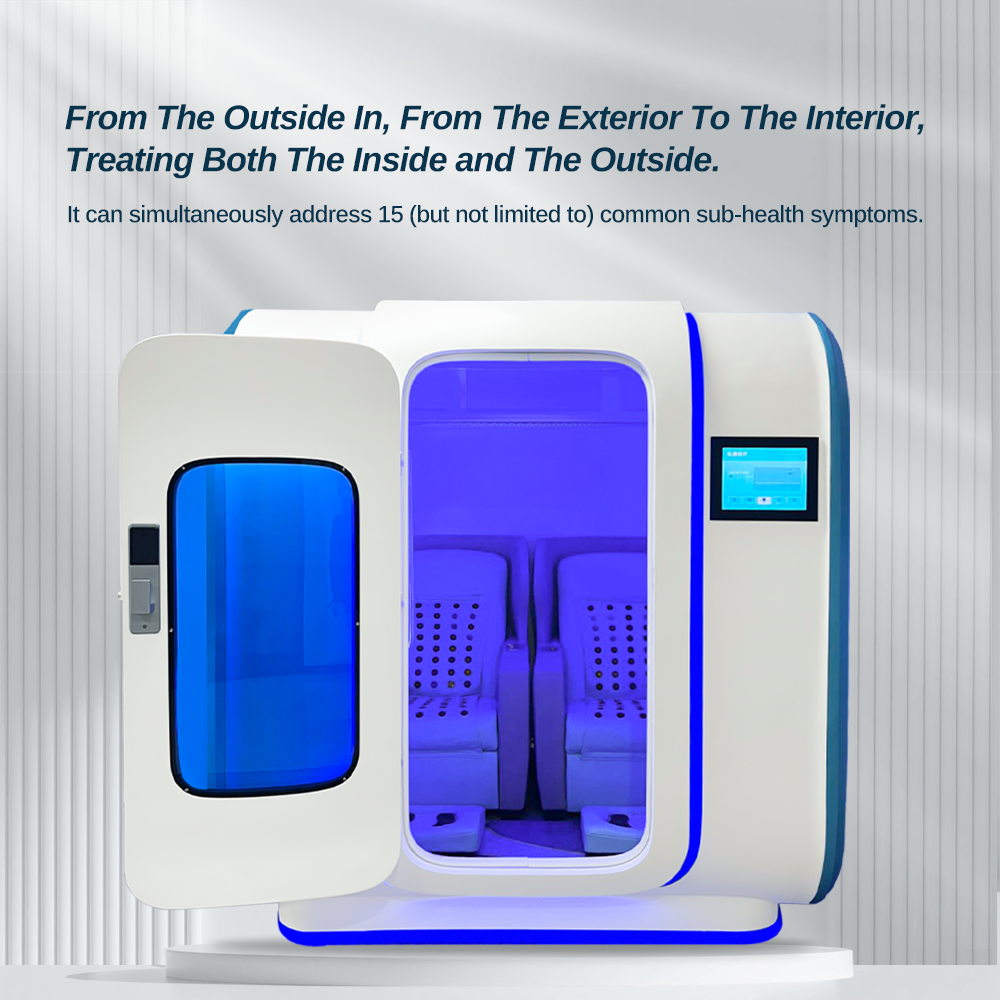
High end wellness rooms come equipped with advanced biometric sensors that track various health metrics. These include things like PPG for heart rate monitoring, thermal imaging tech, and devices that measure blood oxygen levels. The systems can detect changes in HRV, SpO2 readings, and how heat distributes across the body in real time. Inside these chambers, smart algorithms work behind the scenes to tweak treatment settings automatically. They adjust things like the light therapy wavelengths, magnetic field pulses, hydrogen content, and even the vibrations felt during sessions. All of this happens based on what the sensors are picking up from the person using the chamber at that moment.
The construction meets all requirements of the ISO 13485 standard for medical devices. We've incorporated complete EMI shielding throughout the system and used materials certified as USP Class VI biocompatible. The sound isolated workstations have these really precise laser calibrated light emitters that deliver consistent therapy doses every time. Between each session, the system goes through automatic UV-C cleaning cycles to kill off any pathogens. After putting the units through extensive durability tests, we found they maintain their performance with less than half a percent variation even after ten thousand operations. That means patients can safely use them day after day without worrying about the effectiveness dropping off over time.
High-end wellness chambers have been shown to significantly cut down on systemic inflammation, which is basically what causes most chronic diseases and makes people feel constantly tired. Some recent studies looked at top athletes who used these chambers with combined light therapy and magnetic field treatments. The results were pretty impressive: muscle soreness after workouts dropped about 40%, and they bounced back functionally around three days faster than those in the control group according to research published last year in the Journal of Sports Medicine. Looking at why this works, the near infrared light seems to boost energy production inside cells by as much as 150%. Meanwhile, the magnetic fields help reduce certain inflammatory markers by roughly a third. What this means for athletes specifically is moving away from just treating symptoms when they appear toward actually building stronger cells from within. This matters a lot in competitive sports because small injuries keep adding up over time and eventually limit how well someone can perform long term.
What makes this chamber stand out is its multimodal approach that actually works for regulating the nervous system. People who try it regularly see about a 27% boost in their heart rate variability (HRV) after just three weeks of going twice a week. And HRV isn't just some random number—it's a real indicator of how well our bodies handle stress and maintain balance. At the same time, tests on saliva samples reveal something interesting too: cortisol levels drop by around 31%. This matches up with better sleep quality according to sleep studies. The data shows at least a 22% improvement in REM sleep efficiency plus deeper slow wave sleep patterns. Looking at brain activity through quantitative EEG scans tells another story. There's a noticeable increase in alpha band coherence, especially in the front part of the brain. This connects directly to things like better focus, clearer thinking, and making smarter decisions when stressed. The best part? All these changes can be tracked using regular consumer wearables, which helps people stay motivated and committed to their routine.
The main group using these advanced wellness technologies includes business leaders, startup founders, professional athletes, and people really focused on living longer healthier lives. What brings them together is their need for better brain function, faster recovery times, and ways to keep their cells healthy at the molecular level. Many of them turn to things like PBM light therapy and PEMF magnetic fields to fight off work-related stress issues such as messed up sleep cycles and constant mental exhaustion. Some also do molecular hydrogen treatments because they want to tackle those free radicals that cause premature aging. Around 40 percent of money spent on premium wellness services comes from folks who know technology well and demand top quality equipment backed by real research data. That's why fancy wellness rooms with all sorts of cutting edge devices have become so popular among this crowd, basically extending the whole idea of tracking every aspect of health through gadgets and apps.
More integrative doctors are starting to incorporate these fancy wellness chambers into their practice as supplementary treatments backed by research. Before operations, surgeons often employ vibroacoustic therapy to calm down those spikes in stress hormones that happen during anxious moments, which actually helps patients prepare better for surgery. After procedures, light therapy protocols seem to speed up recovery time for soft tissues by about 30% according to studies in orthopedic and plastic surgery cases. Physical therapists working with long term inflammation issues find that PEMF technology really helps get nerve signals back on track in muscles, leading to noticeable improvements in movement ranges and reduced pain levels reported by their patients. Clinics specializing in integrative approaches notice around 60% more consistent attendance from clients who include these chamber sessions alongside regular treatments for complicated conditions like fibromyalgia or lingering fatigue after viruses, plus various autoimmune problems. This trend shows that these chambers aren't just helping bodies heal faster but also making day to day clinic operations run smoother overall.
For people who need regular access day after day, like top athletes training hard or medical professionals running their clinics, buying equipment outright makes sense most of the time. But let's face it, this comes with a big price tag usually somewhere between fifty thousand to two hundred and fifty thousand dollars. That covers not just the machines themselves but also all the setup work, getting everything calibrated properly, plus keeping things running smoothly over time through maintenance costs. On the flip side, there are these high end wellness spots that provide another option. Their memberships start around three hundred bucks a month, which works better for folks who don't use the facilities every single day. These places are great for people watching their budgets while still wanting access to professional guidance when they come in for sessions.
Adding a luxury wellness chamber to fitness centers really boosts their service offerings and keeps members coming back. The latest Fitness Industry Report from 2023 shows something pretty interesting too: clubs with top notch recovery options tend to hold onto their members better, with retention rates jumping anywhere from 20% all the way up to 35%. That means higher lifetime value for these businesses. When looking at return on investment, there are several factors worth considering. Most equipment lasts around 7 to 10 years before needing replacement. How well the space gets used matters a lot too. And let's not forget about what people are willing to pay extra for quality stuff. Many gyms actually charge 15% to 30% more for memberships when they have those clinically proven recovery technologies available. Makes sense when customers see real benefits from their workouts.
Looking at personal return on investment makes sense when we can actually measure health improvements. For instance, studies show muscle recovery speeds up by around 22% according to research published in the Journal of Sports Medicine back in 2022. This means people miss less work, think more clearly throughout the day, and maintain their physical abilities longer than before. When making choices about investments in health, whether for individuals or organizations, considering costs over several years helps make better decisions. We need to balance what money goes out the door with actual results like improved performance levels, greater ability to bounce back from stress, and better overall health down the road. These kinds of calculations help everyone involved understand if something is truly worth the expense.
Luxury wellness chambers incorporate technologies like photobiomodulation, PEMF therapy, molecular hydrogen, and vibroacoustic therapy to promote systemic healing and recovery.
Combining these therapies can cut down inflammation, speed up recovery, improve mental clarity, and regulate the nervous system more effectively.
High-performance professionals, biohackers, longevity seekers, surgeons, therapists, and integrative clinics are the main users of luxury wellness chambers.
Most people complete their treatments in around 30 minutes per session.
Ownership typically ranges from fifty thousand to two hundred fifty thousand dollars.

Copyright © 2025 by Shenzhen Sonka Medical Technology Co., Limited - Privacy policy